



Disaster recovery services:
A strategic guide
A practical guide exploring disaster recovery and building capability that's tested, validated, and aligned to what businesses depend on to operate.
Why are disaster recovery services important?
Today, every modern business depends on technology to function. Finance systems, customer platforms, supply chains, and the tools employees rely on every day all depend on digital infrastructure working as expected.
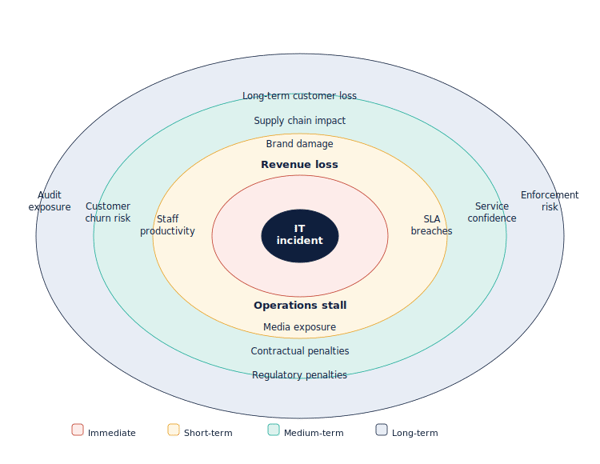
When that infrastructure fails, the question isn’t just how quickly IT can recover - it’s how much business damage is done before it does. Revenue stops. Operations stall. Customers lose confidence, and in many cases, the longer-term impact of an outage far outweighs the initial incident.
This reality has shifted disaster recovery away from a technical safeguard into a core business requirement.
As a disaster recovery services provider, DCS has designed and tested business continuity environments for organisations across finance, legal, and professional services - supporting recoveries from ransomware, infrastructure failure, and many other business-critical scenarios.
By using our experience and creating this guide, we aim to help you understand:
What disaster recovery services should deliver, where organisations can get it wrong, how modern recovery strategies have evolved, what to look for in a provider, and much more. Most importantly, this guide connects technical decisions to their commercial impact - because that’s what ultimately matters.
Please remember, while this blog outlines common approaches, the right strategy will depend on your organisation’s specific environment, risk profile, and technology landscape. If you have specific questions, we’re more than happy to help – just contact our team.
Use the links below to quickly navigate across this guide:
In this guide:
- What is disaster recovery?
- What should be included in a disaster recovery plan?
- Backup vs disaster recovery
- Why your business needs a disaster recovery plan
- The cost of downtime and business impact
- Ransomware and disaster recovery
- How disaster recovery services have changed
- Disaster recovery and the shared responsibility model
- Recovery environments and recovery models
- Cloud vs On-premise disaster recovery
- Managed vs unmanaged disaster recovery services
- Identifying business-critical applications
- Mapping dependencies in disaster recovery
- The disaster recovery lifecycle
- Business impact analysis (BIA)
- Disaster recovery maturity levels
- How much do disaster recovery services cost?
- How to select the right disaster recovery provider
- From recovery to resilience
- How DCS can help
- Glossary of key terms
What is disaster recovery?
Disaster recovery is the capability to restore an organisation’s IT systems, applications, data, and infrastructure after a disruptive event, so that business operations can resume within a defined and acceptable timeframe. A disaster recovery service (Disaster Recovery as a Service/DRaaS) is this capability delivered as a service by a third-party provider.
Put simply, it’s the difference between a disruptive event being a temporary setback or a prolonged business crisis. Disruptive events can range from ransomware attacks and hardware failures to human error and cloud region outages – essentially, any incident that results in system unavailability or data loss.
Disaster recovery ensures your entire operating environment can be restored in a controlled, predictable, and tested way. This predictability is critical because during an incident, uncertainty is often the biggest risk of all.
What should be included in a disaster recovery plan?
For a smooth, business-coordinated, and repeatable recovery strategy, planning is essential, and to achieve this, you need to look beyond technical definitions and into what recovery really involves.
While requirements vary by organisation, in our experience, effective disaster recovery strategies typically address five interdependent areas. Each one plays a distinct role, but it’s their interdependence that ultimately determines whether recovery succeeds or fails.
Infrastructure
This includes the servers, storage systems, and compute resources that run your business workloads. It forms the foundation on which every other component depends, and if the infrastructure isn’t restored, nothing else can function.
Your infrastructure may include virtual machines, container platforms, storage arrays and the hypervisor or cloud compute layer underneath them. In cloud environments, infrastructure recovery may also mean restoring configuration, resource group structures and cloud-native services such as managed databases.
Applications
Applications are the systems that directly support business operations, from finance and customer management to service delivery and revenue generation. In most organisations, these systems define whether the business is operational or not.
Applications rarely operate in isolation, even if accessed through a SaaS service (Software as a Service). They may depend on databases, APIs, authentication services, and third-party integrations. A recovery plan must account for these dependencies and restore systems in the correct sequence – we’ll cover this in more detail later in the guide.
This is where disaster recovery strategies may fall short: systems may be restored, but the application itself is not fully usable. Reinstalling software is not recovery - restoring functionality to the business is.
Applications to consider in your DR scenario include:
-
Finance systems
-
CRM tools
-
Operational software
-
Customer-facing services
If these cannot be recovered quickly and in the correct state, the business cannot operate, regardless of whether the underlying infrastructure has been restored.
Identity
Identity underpins access across your organisation. Technology such as Microsoft Entra ID controls who can access what information, acting as the control panel for modern IT, determining who can access systems, data, and services.
If identity systems are not recovered correctly, users cannot authenticate, and applications cannot communicate. In some cases, even administrative access to the recovery environment itself can be blocked.
In practice, this means you can restore infrastructure, applications and data - and still be completely locked out. Identity recovery is one of the most frequently underestimated dependencies in disaster recovery planning yet can be the single point of failure that determines whether recovery succeeds or stalls.
For this reason, identity integrity must be validated as part of every recovery process - not treated as a secondary consideration.
Solutions such as Entra ID backup, part of our Microsoft 365 backup service, can help bridge this gap and ensure access can be restored alongside infrastructure.
Network
Network connectivity determines whether a recovered environment is accessible and usable. It enables users, applications and services to communicate, and without it, recovery cannot function.
Even when infrastructure and applications have been restored successfully, a misconfigured firewall rule or incorrect DNS entry can prevent access entirely.
This can be a common point of failure during recovery, where systems are technically online, but the business cannot access them. In effect, the environment is restored - but operations remain down.
Network configuration must be documented, version-controlled and explicitly validated as part of any disaster recovery exercise. Without this, recovery can become unpredictable and difficult to execute under pressure.
Data
According to Statista, the world’s total data storage is projected to exceed527.5 Zettabytes by 2029, which is 527.5 trillion gigabytes of data.
Data underpins every critical business function - from financial reporting to customer experience. It includes documents, databases, financial records, customer information, transaction histories and intellectual property.
Data recovery is more than retrieving files from a backup; it means ensuring that restored data is complete, consistent, and in the correct state relative to your desired Recovery Point Objective. Incomplete or inconsistent data can often be just as damaging as total data loss, and this is where recovery objectives become critical.
When defining your disaster recovery strategy, Recovery Point Objective (RPO) and Recovery Time Objective (RTO) are key considerations. These are not just technical metrics; they define how much data, revenue, and operational continuity your organisation is willing to risk during an incident.
For help defining these targets, read our guide on Recovery Point Objective (RPO) and Recovery Time Objective (RTO).
If just one of these components can’t be recovered within an acceptable timeframe, business operations will be impacted regardless of how well the others perform. In other words, recovery is only as strong as its weakest link.
The same principle applies when comparing backup and disaster recovery - protecting data alone through a copy does not guarantee that services can be restored.
Backup vs Disaster Recovery
One of the most common misconceptions in IT strategy is the belief that backup equals recovery. Backups preserve copies of data. Disaster recovery defines how quickly and completely your entire business environment can be restored after an incident.
An organisation can have reliable backups and still be unable to recover its operations within an acceptable timeframe. Recoverability requires planning, orchestration and validation, not just data protection.
Backup alone does not address the infrastructure, rebuild time, application dependencies, identity systems, network configuration or failover orchestration. For that, you need a disaster recovery strategy.
For a deeper breakdown, read our blog Why Backup and Disaster Recovery are not equal.
Why your business needs a disaster recovery plan
In recent years, the risks facing organisations have evolved significantly. What’s changed is not just the frequency of disruption, but also the speed at which it impacts the business.
The question now is not whether your business will face a disruptive event, but whether you will be able to recover from it quickly enough to protect your revenue, customers, reputation and compliance obligations.
The cost of downtime and business impact
Unplanned downtime is no longer just an IT issue - it is a direct commercial risk that carries a cost that goes well beyond the IT team.
The financial exposure varies by sector and business model, but the impact builds across several areas, including:
-
Revenue lost during the period of unavailability
-
Reduced productivity across all staff who depend on IT systems
-
Customer churn risk where service availability is central to the relationship
-
Brand and reputational damage that outlasts the incident itself
-
Contractual penalties where SLAs have been breached
In many cases, the longer-term consequences - particularly reputational damage and customer loss - exceed the immediate financial impact of the outage itself.
Commercial and regulatory drivers
As a result, disaster recovery has become a board-level concern, not just a technical consideration. Businesses today face a growing set of commercial and regulatory obligations that require them to demonstrate a working disaster recovery capability.
For a more in-depth look at how disaster recovery is impacting board level conversations, read our blog Why disaster recovery testing is a board-level priority.
Areas of consideration include:
-
Revenue continuity: boards and investors increasingly want evidence of operational resilience planning.
-
Customer trust: enterprise procurement and supply chain frameworks often require DR evidence, as seen in the Cyber Security and Resilience Bill
-
Contractual SLAs: customers and partners may include uptime commitments that depend on recovery capability
-
Insurance requirements: cyber insurance underwriting increasingly asks about backup, DR testing and recovery architecture
-
Supply chain resilience: disruption to your systems may have downstream consequences for your customers and partners
-
Reputational protection: public incidents involving prolonged downtime carry lasting commercial consequences
-
Regulatory audit evidence: sectors including financial services, healthcare, and legal require demonstrable recovery capability. Regulatory frameworks such as those influenced by the Financial Conduct Authority are placing increasing emphasis on demonstrable recovery capability, not just documented plans.
For organisations operating in regulated industries, these obligations become more defined and more strictly enforced. Requirements around data protection, operational resilience and auditability place additional pressure on organisations to demonstrate not just recovery capability, but proven recovery performance.
While regulatory and commercial pressures are increasing, the need to demonstrate recovery capability against real-world threats - particularly ransomware - is actively testing whether that capability will hold under pressure.
Ransomware's impact on disaster recovery services
Ransomware has now established itself as one of the biggest drivers of disaster recovery investment in businesses.
According to the DSIT Cyber Security Breaches Survey 2025, the estimated percentage of all UK businesses experiencing a ransomware crime increased significantly, from less than 0.5% in 2024 to 1% in 2025. This equates to around 19,000 more businesses in the UK being victims of ransomware in 2025. The National Cyber Security Centre also continues to highlight ransomware as a significant cyber threat facing UK organisations.
Modern ransomware attacks are no longer opportunistic - they are targeted, sophisticated and specifically designed to undermine your recovery capability before the encryption is even triggered. In many cases, recovery is the primary target, not just the systems themselves and in 2023, 93% of cyber-events also targeted backup repositories.
This means that by the time a ransomware attack becomes visible, the ability to recover has often already been compromised.
Organisations that assumed their backups would protect them have often discovered, under pressure, that recovery was unavailable, slower, more complex or more expensive than they expected. This is where the gap between perceived resilience and actual recovery capability becomes clear.
Ransomware, alongside broader shifts in how organisations operate, has fundamentally reshaped how disaster recovery is designed - exposing the limitations of legacy approaches and accelerating the move toward more resilient, modern architectures.
How disaster recovery services have changed
Disaster recovery services have evolved significantly over the past decade. Where recovery was once focused on restoring data from backup over hours or days, modern organisations now require near-continuous availability, minimal data loss, and fully validated recovery capability.
The most significant change is not just in technology, but in expectation - recovery is no longer about restoration alone, but about maintaining business continuity and disaster recovery capability under real-world conditions. In modern environments, recovery is no longer measured by whether systems can be restored, but by how quickly the business can return to normal operation.
The IT environments that disaster recovery needs to protect have also changed fundamentally, and recovery strategies have had to evolve to keep pace. Legacy approaches, often built around on-premise infrastructure and tape-based backup, are no longer sufficient for the way modern businesses operate. Instead, organisations must account for more complex, distributed environments and a rapidly evolving threat landscape.
Several key trends have driven this shift, including:
Cloud-First and Hybrid Infrastructure
Most organisations now operate across a combination of private cloud, public cloud, SaaS platforms and on-premise infrastructure. According to recent reports from IBM, in 2025 30% of all data breaches involved data spread across multiple environments, including public cloud, private cloud and on-premise infrastructure. These incidents are typically more complex, take longer to contain, and carry significantly higher remediation costs.
As a result, disaster recovery services and recovery strategies must account for multiple environments - each with its own recovery mechanisms, shared responsibility models, and service boundaries.
SaaS, Disaster Recovery and the Shared Responsibility Model
One of the most significant changes has been the widespread adoption of SaaS platforms. Business-critical operations increasingly rely on SaaS platforms (Software as a Service), such as Microsoft 365, CRM systems and collaboration tools.
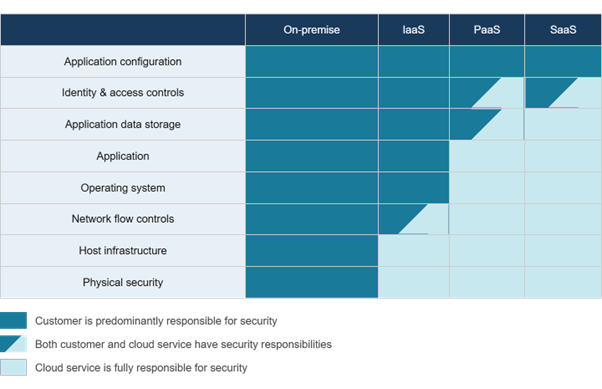
This shift has introduced a new layer of complexity to disaster recovery - particularly around ownership and accountability. Many organisations assume that SaaS platforms include disaster recovery. While SaaS providers typically ensure platform availability and some basic data retention, granular recovery, long-term retention, and point-in-time restoration often remain the customer's responsibility.
Responsibility for data resilience, recovery, and business continuity often remains with the customer as part of the shared responsibility model. This creates a critical gap: systems may be available, but the organisation may still be unable to recover its data or restore services in line with business requirements.
The table below breaks down how responsibilities are often allocated across the four main cloud deployment strategies, highlighting who is responsible for each element.
Operational Resilience and Regulatory Pressure
Regulatory expectations have also reshaped disaster recovery requirements. Organisations are increasingly required to demonstrate not only that recovery plans exist, but that they have been validated and can meet defined impact tolerances. This has elevated disaster recovery from a technical function to a core component of operational resilience and risk management.
Automation and Orchestrated Recovery
Modern disaster recovery increasingly relies on automation and orchestration to reduce recovery time and human error. Failover processes that were once manual are now increasingly scripted and orchestrated, enabling faster and more consistent recovery outcomes. This is particularly important in complex environments, where multiple systems and dependencies must be restored in a precise sequence.
Remote and Distributed Workers
Recovery is no longer confined to restoring systems in a single physical location. As organisations adopt cloud services and support distributed workforces, recovery design must now account for how users actually access systems.
User access, endpoint management and authentication all need to be factored into recovery design. If identity systems fail during a disaster event, staff may be unable to access even fully restored environments.
This means recovery can appear successful from an infrastructure perspective, while the business remains unable to operate.
It’s not just how you recover – it’s also where
Taken together, these shifts have fundamentally changed how organisations need to think about their in-house business continuity strategy or any disaster recovery services they take.
It is no longer enough to utilise a recovery service or solution around a single environment or location. Instead, organisations must consider how recovery operates across a mix of infrastructure types, service models and access points - all with different recovery capabilities and responsibilities.
This introduces a new challenge: not just how to recover systems, but where that recovery should take place, and how those environments are managed, secured and tested.
In practice, this means organisations must make deliberate decisions about where their recovery capability sits - balancing speed, cost, resilience and operational complexity.
Cloud vs on-premise disaster recovery services
The question of where to host your DR capability is no longer a straightforward decision. Most organisations need a considered approach that reflects their current infrastructure, risk profile and commercial constraints.
The table below provides a high-level comparison between on-premise and cloud disaster recovery services; however, this may vary and is dependent on your organisation’s specific infrastructure, risk profile, and operational requirements.
|
On-premise disaster recovery |
|
|
High capital investment in secondary hardware |
OpEx model with pay-as-you-use pricing |
|
Limited geographic resilience without a second site |
Typically, multi-region resilience by design |
|
Hardware procurement delays may extend recovery timelines |
Instant compute capacity, usually on demand |
|
Physical site limitations can affect scalability |
Scales dynamically to workload requirements |
|
Power, cooling and facilities overhead |
No physical infrastructure to manage |
|
Tape rotation or backup cycles can create data loss exposure |
Continuous or near-continuous replication available |
|
No Ingress or Egress costs |
Potential Ingress and Egress costs apply, depending on the cloud provider |
|
Total control over the recovery environment |
Recovery and control lie with the service provider |
|
Testing can disrupt production infrastructure |
Isolated recovery environments for safe testing |
While this comparison highlights where disaster recovery capability can be hosted, it does not fully define how recovery is structured. In reality, most organisations implement a combination of recovery environments - each designed to support different workloads, recovery objectives, and operational requirements.
The different types of disaster recovery environments
Whether created in-house or through a service provider, not all disaster recovery architectures are the same, and the environment you choose plays a critical role in how recovery is delivered. The right approach should reflect your recovery objectives, risk tolerance, and commercial constraints.
Recovery environments can include:
- Secondary data centres: a physically separate location hosting replicated infrastructure, operated by your organisation or a colocation provider
- Cloud failover: recovery into a public or private cloud environment such as Microsoft Azure, with compute resources activated on demand
-
Hybrid failover models: a combination of on-premise secondary capacity and cloud failover, designed to address different workload types
-
SaaS vendor recovery: workloads hosted in SaaS platforms rely on vendor recovery capability, which must be understood and built into your overall DR design
Defining where your workloads recover to is only part of the picture. Organisations must also consider how quickly those environments can be activated, and the level of operational overhead required to maintain them.
Recovery environments vs recovery models
Recovery environments and recovery models are closely related - but they represent two distinct decisions, and a cloud failover environment can be configured as a cold, warm, or hot standby depending on how much infrastructure is pre-provisioned and how replication is managed.
In simple terms, the environment defines where recovery happens, while the model defines how quickly it happens and what it costs to maintain that readiness. The right combination depends on the recovery objectives defined for each application tier.
Some elements with high Recovery Time Objectives require models that minimise activation time, while lower-priority workloads can tolerate slower, more cost-efficient approaches.
This is why many organisations adopt a tiered, mix-and-match approach rather than applying a single recovery model across the entire estate.
Standby and recovery model definitions
|
Model |
Description |
Potential RTO |
Cost |
Best For |
|
Cold Standby |
Infrastructure is in place but inactive. Manual activation is needed at the point of recovery. |
Days |
Lower |
Non-critical workloads |
|
Warm Standby |
The environment is running but operating at reduced capacity, requiring scaling before full production load can be assumed. |
Hours to days |
Medium |
Important but not mission-critical systems |
|
Hot Standby |
A fully active secondary environment running in parallel. Near-instant failover. |
Minutes |
Higher |
Mission-critical, customer-facing systems |
|
DRaaS or managed DR |
With Disaster Recovery as a Service, the provider manages recovery infrastructure and orchestration. |
Defined in SLA |
Flexible |
Organisations requiring a managed recovery capability |
While these models define how recovery is structured and delivered, they also introduce a critical operational question. Designing the right combination of environments and recovery models is only part of the challenge - organisations must also decide who is responsible for implementing, managing, and validating that capability over time.
This is where the distinction between unmanaged and managed disaster recovery becomes particularly important.
Unmanaged vs managed disaster recovery services
Let’s now look more closely at how disaster recovery services are delivered in practice.
Unmanaged disaster recovery requires your organisation to design, implement, test, and maintain its own recovery capability. This places full responsibility on internal teams - demanding specialist expertise, dedicated resources, and ongoing investment in tooling and validation.
Some organisations encounter challenges managing this, particularly in mid-market environments where time, budget, and in-house expertise may be limited. Yet, for organisations with the capacity and capability to commit to this, it can be an effective and controlled approach.
Managed disaster recovery services transfer this operational responsibility to a specialist provider. In many cases, the provider, such as DCS, also supports the design phase, helping to define appropriate levels of protection, recovery objectives, and the underlying architecture for different workloads. This typically includes infrastructure management, monitoring, regular testing, and the escalation support required during a live recovery event - with the provider taking on the ongoing operational overhead that would otherwise sit with internal teams.
Both models can deliver effective recovery capability when properly resourced and maintained and an organisation’s preferred choice should depend on its infrastructure, risk profile, operational requirements, and commercial constraints.
The table below outlines the common key differences between these approaches. While these distinctions are typical, the exact division of responsibilities will vary depending on the service provider, the disaster recovery service itself and your organisation’s specific environment and requirements.
|
Area |
Unmanaged Disaster Recovery |
Managed Disaster Recovery (DRaaS) |
|
Ownership |
Fully managed internally by your organisation |
Delivered and managed by a specialist provider |
|
Design & Strategy |
Designed and managed in-house, drawing on internal expertise and resource" |
Provider helps define recovery architecture, protection levels, and RPO/RTO targets |
|
Implementation |
Internal teams responsible for setup and configuration |
Provider implements and configures recovery environment |
|
Ongoing Management |
Requires dedicated internal resource |
Continuous management handled by the provider |
|
Monitoring |
Internal monitoring of replication and systems |
24/7 monitoring and proactive management |
|
Testing & Validation |
Managed in-house. Frequency and process set by the internal team |
Regular, structured testing with documented outcomes |
|
Scalability |
Limited by internal infrastructure and capacity |
Scales with business needs and cloud resources |
|
Response During Incident |
Internal teams manage recovery under pressure |
Access to experienced engineers and defined escalation support |
|
Internet dependency |
Recovery does not depend on internet connectivity |
Recovery depends on stable, sufficient internet connectivity |
|
Cost Model |
High internal resource cost + tooling investment |
Predictable OpEx model aligned to service scope |
|
Suitability |
Organisations with significant in-house DR expertise and resources |
Mid-market organisations or those requiring reliable, tested recovery capability |
|
Dependency risk |
The in-house team manages all dependencies |
Reliant on provider's infrastructure availability and SLA performance |
While the differences between unmanaged and managed disaster recovery are significant, the delivery model alone does not determine the success of your recovery strategy.
Regardless of who manages it, disaster recovery is only effective if it is aligned with what the business actually depends on to operate. Without this clarity, even well-designed recovery solutions can fail to restore the services that matter most.
This is where many organisations encounter challenges. Recovery capability may exist, but without a clear understanding of business-critical systems and their dependencies, that capability can be misapplied or insufficient under real-world conditions.
Identifying business-critical applications
Many organisations attempt to protect every system equally - but effective disaster recovery depends on prioritising what truly matters to the business. This starts with identifying which applications and services are most critical to operational continuity, and ensuring that they can be recovered within acceptable timeframes.
Application tiering and prioritising in disaster recovery
A structured business continuity and disaster recovery strategy begins with dividing applications based on their importance to the business. This allows organisations to align recovery investment with business impact, rather than applying a one-size-fits-all approach.
This typically results in three tiers:
-
Tier 1 (mission-critical): Systems where downtime immediately impacts revenue, customer commitments or regulatory obligations. Examples include payment processing, customer portals and ERP systems. These require aggressive RTO and RPO targets.
-
Tier 2 (Business-important): Systems that are operationally significant but can tolerate some downtime. These are typically recovered after mission-critical systems as part of a structured recovery sequence.
-
Tier 3 (Non-critical): Internal tools, development environments and low-priority systems. These can be recovered later, often with less stringent recovery objectives.
-
Finance systems: accounting, payroll and transaction processing platforms
-
CRM and customer platforms: systems that hold customer data and support sales and service delivery
-
Identity and authentication: Microsoft Entra ID and any SSO platform
-
Communication and collaboration: Microsoft 365, email and collaboration tools
-
Inter-application dependencies: APIs, integrations and data flows between systems
-
SaaS reliance: cloud-hosted platforms that do not include customer-defined recovery targets by default
Mapping dependencies and areas of protection
As mentioned earlier in the guide, dependency mapping is essential to an effective disaster recovery plan. Once applications have been prioritised, the next step is to map the dependencies that underpin them. Recovery often fails not because the primary system is unavailable, but because a supporting dependency has been overlooked, and many organisations only discover these dependencies during a failed recovery test.
When mapping applications for your disaster recovery strategy, you should consider the full scope of dependencies, which may or may not include:
Despite the scale of the threats today, organisational readiness in the UK remains relatively low. Only 53% of medium-sized businesses and 75% of large businesses have a formal incident response plan in place - meaning a significant proportion of mid-market organisations would be managing a live recovery event without documented, tested procedures to follow.
Exploring the disaster recovery lifecycle
Disaster recovery is often treated as a one-off project, but this approach often fails under real-world conditions, with many organisations only discovering gaps during their first incident.
DR is a capability that needs to be designed, implemented, validated and continually maintained. Organisations that treat disaster recovery planning as a tick-box exercise consistently find gaps when recovery is needed most.
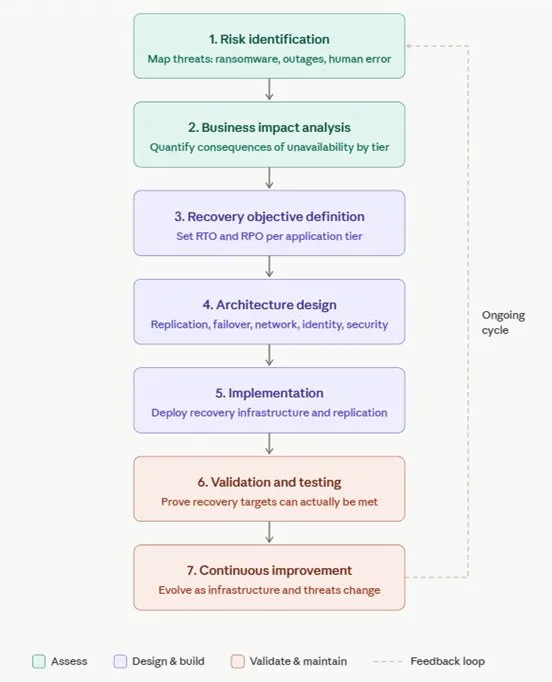
A structured disaster recovery lifecycle provides a framework for building and maintaining this capability over time.
While approaches may vary, most effective strategies follow a series of core stages:
-
Risk identification: mapping the threat landscape relevant to your organisation, sector and infrastructure. This includes risks such as ransomware, infrastructure failure, cloud region outages, supply chain disruption and human error.
-
Business impact analysis (BIA): quantifying the operational, commercial and regulatory consequences of system unavailability across different timeframes. This forms the evidence base for setting your recovery priorities and investment decisions.
-
Recovery Objective definition: setting specific, measurable targets for data loss tolerance (RPO) and maximum acceptable downtime (RTO) for each application tier.
-
Architecture design: designing the technical recovery environment, including replication models, failover infrastructure, network configuration, identity recovery and security controls. This stage defines how recovery will actually be delivered in practice.
-
Implementation: deploying and configuring the recovery infrastructure, replication processes and monitoring capability. This is where strategy becomes operational.
-
Validation and testing: running structured DR tests to confirm that recovery targets can actually be met. Testing is the only way to move from a documented plan to a proven recovery capability
-
Continuous improvement: keeping DR current as infrastructure changes, applications evolve, cloud deployments expand, and threat models shift.

Business Impact Analysis: The foundation of your strategy
Of the seven stages above, the Business Impact Analysis (BIA) is one of the most critical, and often one of the most frequently overlooked, with some organisations setting recovery targets based on instinct or assumption, rather than measured business impact.
The result is recovery objectives that either over-engineer protection for low-value systems or, more commonly, under-protect the systems that genuinely drive revenue and regulatory compliance. Without this analysis, recovery investment is often misaligned with actual business risk.
A structured BIA provides the foundation for informed decision-making, typically answering these four core questions for each system or application in scope:
-
What is the operational consequence of this system being unavailable for 1 hour, 4 hours, 24 hours and 72 hours?
-
What is the commercial consequence in terms of lost revenue, SLA penalties and customer impact?
-
What is the regulatory consequence in terms of reporting obligations, audit exposure and potential enforcement?
-
What is the reputational consequence if the outage becomes visible to customers, partners or the press?
The answers to these questions determine where investment in recovery capability is justified, and at what level. For example, a transaction processing platform may require a hot standby architecture with continuous replication and an RTO measured in minutes. By contrast, an internal HR system may be adequately supported by a 24-hour RTO and periodic backups.
Treating these systems identically is inefficient. Treating them in reverse introduces significant risk.
A well-executed BIA also further highlights dependencies that may not be visible from a simple system inventory. For example, an e-commerce platform may rely on a payment gateway, a fulfilment API, and an authentication service. If any of these are unavailable during recovery, the platform itself cannot function - even if it has been successfully restored.
Exploring your disaster recovery maturity level
Once a structured approach to disaster recovery has been defined, the next step is to assess how your plan measures up in practice. Many organisations believe they have adequate protection in place, but without a clear benchmark, it can be difficult to identify gaps or prioritise improvement.
DCS has developed a straightforward maturity model to help with this assessment – simply tick those that apply to your business to see where it currently sits.
|
Level 1: Undefined
|
|
Level 2: Documented plan
|
|
Level 3: Backup-centric
|
|
Level 4: Tested and validated
|
|
Level 5: Secure, segmented and continuously validated
|
Currently, 71% of UK businesses back up their data via a cloud service; with only 29% of businesses overall conduct formal cybersecurity risk assessments. This leaves many mid-market UK organisations sitting at Level 2 or Level 3.
At this stage, recovery capability is often documented but not fully validated, creating a gap between perceived resilience and actual readiness. Progressing to Level 4 or Level 5 requires structured investment in process, architecture, tooling, testing, and ongoing management.
Closing this gap requires structured investment in process, architecture, tooling, and ongoing validation. For organisations with dedicated internal resource and the capacity to manage this consistently, an in-house approach can be effective. For others, external support - whether advisory or fully managed - can provide the expertise and operational continuity needed to move from assumed recovery to evidenced capability.
How much do disaster recovery services cost?
Understanding your current maturity level is only part of the picture; the next step is determining what it takes to close the gap. For many businesses, it raises a practical question around investment and how disaster recovery capability should be funded and scaled over time.
This leads to one of the most common questions in disaster recovery planning: what does it actually cost?
There is no single answer. The cost of disaster recovery services depends on several interconnected variables:
-
Recovery objectives: more aggressive RTO and RPO targets require more sophisticated and expensive infrastructure. Near-zero data loss requires synchronous or near-synchronous replication, while recovery within minutes typically depends on hot standby or active architectures.
-
Scope of coverage: the number and type of workloads covered, including on-premise servers, cloud workloads and SaaS platforms, directly affects cost.
-
Storage requirements: retention period, incremental vs full backups and immutable storage for ransomware resilience all contribute to storage costs.
-
Testing frequency and approach: managed DR testing, particularly simulated failover and live failover tests, requires dedicated resources and time.
-
Licensing: cloud platform licensing, DR software licensing and monitoring tooling contribute to the total cost of ownership.
-
Compliance obligations: regulated industries may require specific audit evidence, immutable retention or geographic data residency that affects architecture and cost.
-
Internal vs managed: In-house DR management requires dedicated staff time. Managed DRaaS transfers this overhead to a specialist provider at a cost.
The most important commercial consideration is not the cost of disaster recovery itself, but the cost of an incident without it. In many cases, a single significant outage will exceed the annual investment required to implement a well-designed recovery capability. In this context, disaster recovery becomes less of a cost decision and more of a risk management decision.
How to select the right disaster recovery provider
Once the level of investment has been established, the next step is ensuring that the investment delivers the right level of protection. Choosing the right provider requires more than comparing features - it requires understanding how recovery capability is designed, delivered, and validated in practice.
For organisations choosing to outsource disaster recovery, this means carefully evaluating providers to ensure they can meet both technical requirements and commercial expectations. Not all providers deliver the same level of capability, and selecting the right partner is critical to achieving reliable, proven recovery.
Key criteria to evaluate include:
-
Scope of service: Does the provider cover the full recovery lifecycle - including backup infrastructure, replication, cloud failover, managed orchestration, and incident escalation? The scope should align closely with your organisation’s specific recovery requirements.
-
Defined SLAs: Are recovery time (RTO) and recovery point (RPO) commitments clearly documented and measurable?
-
Testing capability: Can the provider deliver regular, structured disaster recovery testing? Including simulated failover and full recovery validation, without impacting production systems?
-
UK-based support: Is engineering support available within the UK, aligned to your time zone, with clearly defined escalation paths for live recovery events?
-
Security architecture: Is the recovery environment designed to withstand modern threats such as ransomware, credential compromise, and lateral movement?
-
Commercial flexibility: Can the service scale with your organisation, support hybrid environments, and adapt as your infrastructure and requirements evolve?
-
Compliance evidence: Can the provider produce audit-ready documentation demonstrating recovery capability, testing outcomes, and ongoing service performance?
From recovery to resilience
Selecting the right provider is a critical step - but it is only part of the overall objective. Disaster recovery is not just about tools, infrastructure, or service delivery models; it is about ensuring the business can continue to operate when disruption occurs.
This is where the focus shifts from recovery capability to broader business continuity and disaster recovery strategy focused on long-term organisational resilience. It requires tested capability, not just documented intent - and, depending on your needs, it may require a partner who understands both the technical architecture and the business context.
Ultimately, the difference between disruption and crisis is not the incident itself, but the ability to recover from it.
How DCS can help
DCS is a UK-based, engineer-led cloud and cyber resilience provider.
We work with organisations across sectors to design, implement, test, and maintain disaster recovery capabilities that are aligned to business risk, validated against defined recovery targets, and built to perform under real-world conditions.
Our approach ensures recovery is not just documented but proven - giving you the confidence that your organisation can withstand disruption without compromising operations, compliance, or customer trust.
If your current disaster recovery posture leaves you uncertain about your ability to recover, the most effective next step is a structured assessment with one of our engineers. This provides a clear, evidence-based view of your current capability, the gaps that need to be addressed, and a practical path forward.
To speak to one of our engineers, call +44 3543 888327 or email enquiries@virtualdcs.co.uk.
Glossary of key terms
The following terms are used throughout this guide.
Recovery Point Objective (RPO)
The maximum amount of data loss an organisation can tolerate following a disruptive event, expressed as a point in time. If your RPO is four hours, the recovery architecture must ensure that no more than four hours of data can be lost.
Recovery Time Objective (RTO)
The maximum acceptable period of downtime for a given system or service. If your RTO is two hours, recovery processes must be capable of restoring that service within two hours of an incident being declared.
Disaster recovery as a service (DRaaS) / Disaster recovery service
A managed service model in which a specialist provider takes responsibility for designing, implementing, maintaining and supporting an organisation's disaster recovery capability, including replication, failover infrastructure, testing and incident escalation, delivered under defined SLAs.
The shared responsibility model
A framework used by cloud and SaaS providers that defines the division of security and recovery obligations between the provider and the customer. The provider is typically responsible for the underlying platform and infrastructure. The customer is responsible for their data, workloads and recovery capability.
Replication
The process of replicating data from a primary environment to a secondary location, so that a recent copy is available for recovery if the primary becomes unavailable.
Failover
The process of switching IT operations from a primary system or environment to a secondary one when the primary fails or is taken offline. Failover can be manual or automated, depending on the recovery architecture.
Failback
The process of returning IT operations to the original primary environment after a failover event, once the primary has been restored and validated.
Hot standby
A recovery model in which a fully active secondary environment runs in parallel with the primary. Failover can occur within seconds or minutes. This model often carries the highest cost but delivers the lowest RTO.
Warm standby
A recovery model in which a partially configured secondary environment is kept broadly current but requires activation and scaling at the point of recovery.
Cold standby
A recovery model in which secondary infrastructure exists but is inactive until needed. Manual activation is required at the point of recovery. This typically delivers the lowest cost but the highest RTO, often measured in hours to days.
Immutable backup
A backup that cannot be altered, deleted or encrypted after it has been written. Immutable backups can withstand ransomware attacks that target and destroy conventional backup repositories.
Business Impact Analysis (BIA)
A structured process for quantifying the operational, commercial and regulatory consequences of system unavailability across different timeframes. The BIA provides the evidence base for setting RPO and RTO targets.
Application tiering
The process of categorising IT systems and applications by their criticality to business operations, typically into three tiers: mission-critical, business-important and non-critical. Tiering determines the level of recovery investment applied to each system.
Business continuity planning (BCP)
A broader organisational discipline that addresses how a business maintains operations during and after any significant disruption, of which disaster recovery is the IT-specific component.
Microsoft Entra ID
Microsoft's cloud-based identity and access management platform, formerly known as Azure Active Directory. Entra ID controls authentication and authorisation across Microsoft 365, Azure and connected SaaS applications. Because it underpins access to all other systems, it is a critical dependency in any disaster recovery scenario.
Operational resilience
A regulatory and organisational concept that defines an organisation's ability to prevent, adapt to, respond to, recover from and learn from operational disruptions.
Impact tolerance
A term used in DORA, PRA’s and the FCA’s operational resilience framework that defines the maximum tolerable level of disruption to an important business service, expressed in terms of duration and acceptable outcomes.
Air gap
A security measure that physically or logically isolates a backup or recovery environment from the production network, preventing ransomware or other threats from reaching it via network-based lateral movement.
Lateral movement
A technique used by attackers, particularly in ransomware incidents, to move from an initial point of compromise through a network to access additional systems, including backup infrastructure and identity platforms, before deploying the final payload.
Service Level Agreement (SLA)
A contractual commitment between a service provider and a customer that defines specific performance standards, including recovery time and recovery point targets in the context of disaster recovery services.
DNS (Domain Name System)
The system that translates human-readable domain names into IP addresses. In a disaster recovery scenario, DNS configuration must be updated to redirect traffic to the recovery environment, making it a critical step in the failover process.
Talk to the DCS team
Engage with our data protection team to see how DCS helps minimise downtime, protect revenue streams, and maintain customer trust through robust backup and disaster recovery.